
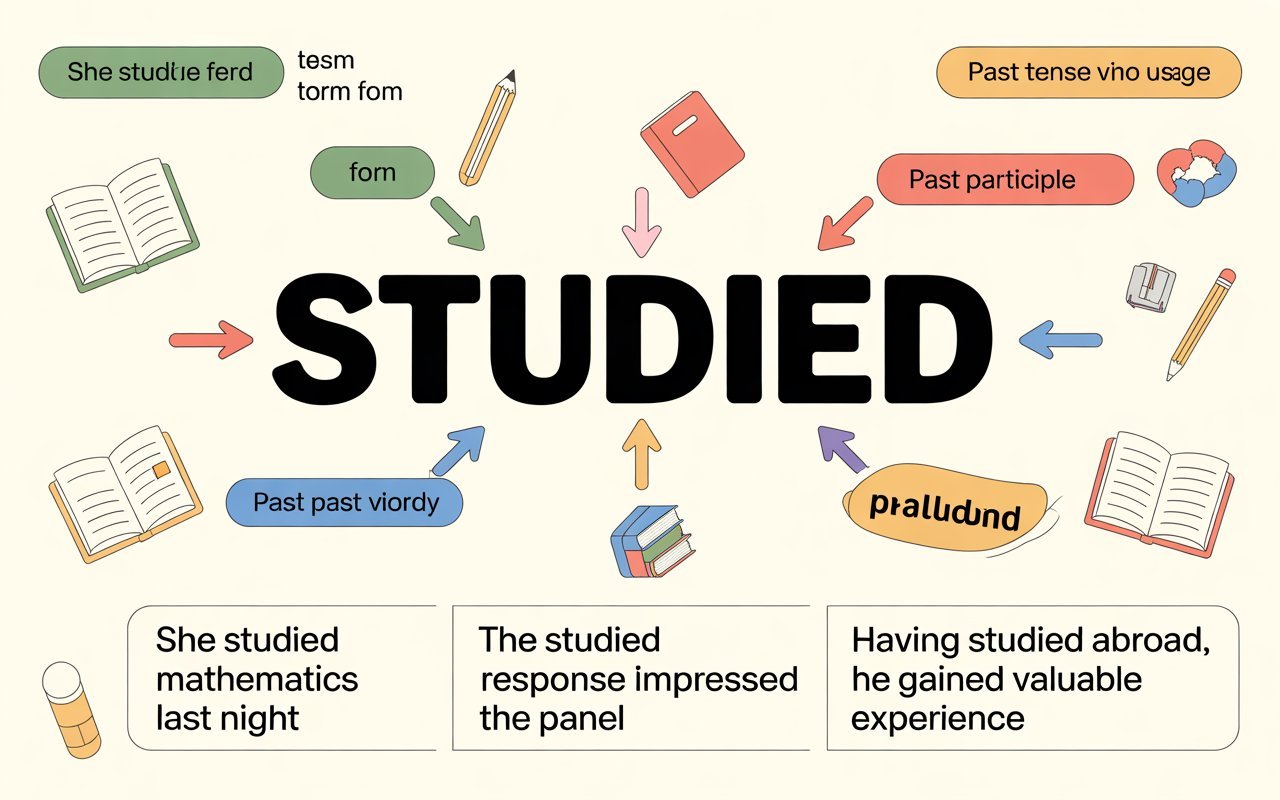

Language shapes how we communicate ideas, emotions, and intentions. One word that often appears in both academic writing and everyday English is studied. Although it seems simple, this word carries several meanings depending on context. It can refer to deliberate actions, thoughtful behavior, or past learning experiences.
Understanding how studied works in sentences helps learners improve clarity and precision in communication. In grammar, it can function as the past tense of “study” or as an adjective describing something carefully planned or intentional.
In modern communication—especially academic writing, journalism, and professional communication—the word appears frequently. For example, writers may describe a “studied response” to highlight that a reply was carefully considered rather than spontaneous.
This article explains the meaning, grammar usage, examples, and real-life applications of studied. By the end, you’ll know how to use it confidently in both writing and conversation.
The Meaning of Studied in English
The word studied has two primary meanings in English. First, it can be the past tense of the verb “study.” In this sense, it means someone learned about a subject or examined something carefully. For example, “She studied biology at university.”
Second, studied can function as an adjective. In this role, it describes actions that are deliberate or carefully planned rather than natural or spontaneous. Dictionaries describe a studied action as something thoughtful or intentional.
This dual meaning makes the word versatile. Writers often use it to add nuance to descriptions. For instance, saying someone gave a “studied response” implies the answer was carefully crafted rather than impulsive.
Understanding context is key. In conversation, the past-tense meaning is more common. In literature and journalism, the descriptive meaning appears more frequently.
Studied as the Past Tense of Study
When used as a verb, studied is simply the past tense and past participle of “study.” It describes an action completed in the past.
For example:
- She studied English for five years.
- They studied the data carefully before making a decision.
- The scientist studied climate patterns for decades.
- The students studied late into the night before the final exam.
- She studied the instructions before assembling the machine.
In this sense, the word relates to learning, observation, or research. It can apply to academic learning, personal investigation, or professional analysis.
In academic writing, researchers often use phrases like “scientists studied the effects” or “experts studied the data.” This usage highlights systematic investigation and evidence-based conclusions.
The past-tense usage also appears in storytelling. Writers may describe characters who studied a map, studied someone’s expression, or studied a situation before acting. Here, the word suggests careful observation and thoughtful consideration.
Studied as an Adjective: Deliberate or Calculated
As an adjective, studied means something done intentionally, often with planning or calculation. For example, someone may show “studied calm” in a stressful situation.
This usage emphasizes that behavior is deliberate rather than natural. Studied actions are planned, calculated, or consciously designed.
Examples include:
- The leader maintained a studied silence during the debate.
- She gave a studied smile to hide her nervousness.
- His speech contained studied simplicity to make it easier for the audience.
- The actor paused with studied confidence before delivering the final line.
Writers and journalists often use this adjective to add depth to descriptions. It suggests a person is intentionally presenting a certain image or reaction rather than responding naturally.
Common Contexts Where Studied Is Used
The word studied appears in several common contexts across different fields.
In academic settings, it refers to research and learning. Students study subjects such as history, medicine, or economics. Researchers study social trends, environmental patterns, and human behavior.
In literature, authors use the adjective form to describe characters’ behavior. A character might display “studied indifference,” meaning they pretend not to care.
In journalism, reporters often describe public figures’ responses as “studied,” implying that statements were carefully crafted or strategically delivered.
In everyday speech, people also use the past tense meaning casually. Someone might say, “I studied all night for the exam,” or “I studied the instructions before assembling the device.”
These contexts show how flexible the word is across different communication styles.
Examples of Studied in Everyday Sentences
Seeing examples helps clarify how studied works in real language. The word can appear in both formal and informal sentences.
Example sentences include:
- She studied the contract before signing it.
- He gave a studied response during the interview.
- The researchers studied the effects of pollution on marine life.
- She maintained a studied calm despite the chaos.
- The teacher studied the students’ progress throughout the year.
Each sentence highlights a different nuance. Some emphasize learning or observation, while others emphasize deliberate behavior.
Because of this versatility, the word works well in both spoken and written English.
Synonyms and Related Words
Understanding synonyms helps expand vocabulary and improve writing style. Words similar to studied often depend on the context in which the word is used.
For the adjective meaning (deliberate behavior):
- Deliberate
- Calculated
- Planned
- Considered
- Intentional
For the past-tense learning meaning:
- Learned
- Reviewed
- Examined
- Researched
- Analyzed
Choosing the right synonym can make writing clearer and more engaging. For example, replacing “studied carefully” with “analyzed thoroughly” may better describe scientific work.
However, sometimes studied carries a subtle tone that synonyms cannot fully replace. It often implies both thoughtfulness and intention.
Discover exclusive content from Urbaneditorial
Real Case Study: How Researchers Studied Social Media Behavior
A practical example helps demonstrate how the word appears in real academic contexts.
Researchers conducted a large study to understand social media habits among teenagers. Their goal was to explore how online activity influences mental health and emotional well-being.
The research team collected responses from thousands of students. They studied patterns such as screen time, types of content viewed, and emotional reactions to social media posts.
After analyzing the information, the researchers discovered that excessive social media use was linked to higher stress levels among some participants. However, moderate use showed positive effects when platforms were used for communication and learning.
This case study highlights the research meaning of studied. Scientists carefully examine evidence, analyze patterns, and draw conclusions based on data.
Why Understanding the Word Studied Matters
Learning the nuances of studied improves both comprehension and expression. Language learners often encounter the word in textbooks, articles, and professional communication.
Understanding the difference between the verb and adjective forms prevents confusion. For instance, “He studied the problem” focuses on learning or analysis, while “He gave a studied response” highlights intentional behavior.
In professional writing, the word also adds sophistication. Journalists and analysts frequently use it to describe carefully crafted statements or reactions.
Improving vocabulary with words like studied enhances clarity, precision, and credibility in communication.
Common Mistakes When Using Studied
Even though studied is simple, learners sometimes misuse it. The most common mistake is confusing the adjective meaning with the verb meaning.
For example:
Incorrect: He studied silence during the meeting.
Correct: He maintained studied silence during the meeting.
Another mistake is using the word unnecessarily when a simpler term would work better. Instead of saying “studied the door,” a writer might prefer “looked at the door.”
Understanding context and tone helps avoid these mistakes and makes writing more natural.
Tips for Using Studied Effectively
To use studied effectively in writing and conversation, consider these tips:
- Use it when describing careful observation or research.
- Use it as an adjective when behavior is intentional or calculated.
- Avoid overusing it in simple sentences.
- Check context to ensure the meaning is clear.
- Pair it with descriptive nouns like “response,” “silence,” or “calm.”
These strategies make the word more impactful and natural in communication.
FAQs
- What does studied mean in English?
Studied can mean the past tense of “study” or describe something deliberate or carefully planned. - Is studied a verb or an adjective?
It can be both. As a verb, it refers to learning or examining. As an adjective, it describes intentional behavior. - Can studied mean deliberate?
Yes. When used as an adjective, studied often means planned, calculated, or intentional. - What is an example sentence using studied?
Example: She gave a studied reply during the press conference. - Is studied used in academic writing?
Yes. Researchers often say they “studied” data, trends, or experiments to describe systematic investigation.
Conclusion
The word studied may appear simple, but it carries multiple meanings that enrich communication. It can describe past learning, careful observation, or deliberate behavior.
Understanding these nuances helps readers interpret texts more accurately and helps writers express ideas more clearly. Whether used in academic research, journalism, or everyday conversation, the word adds precision and depth.
By learning how to use studied effectively, you strengthen your vocabulary and improve your ability to communicate complex ideas with clarity.