
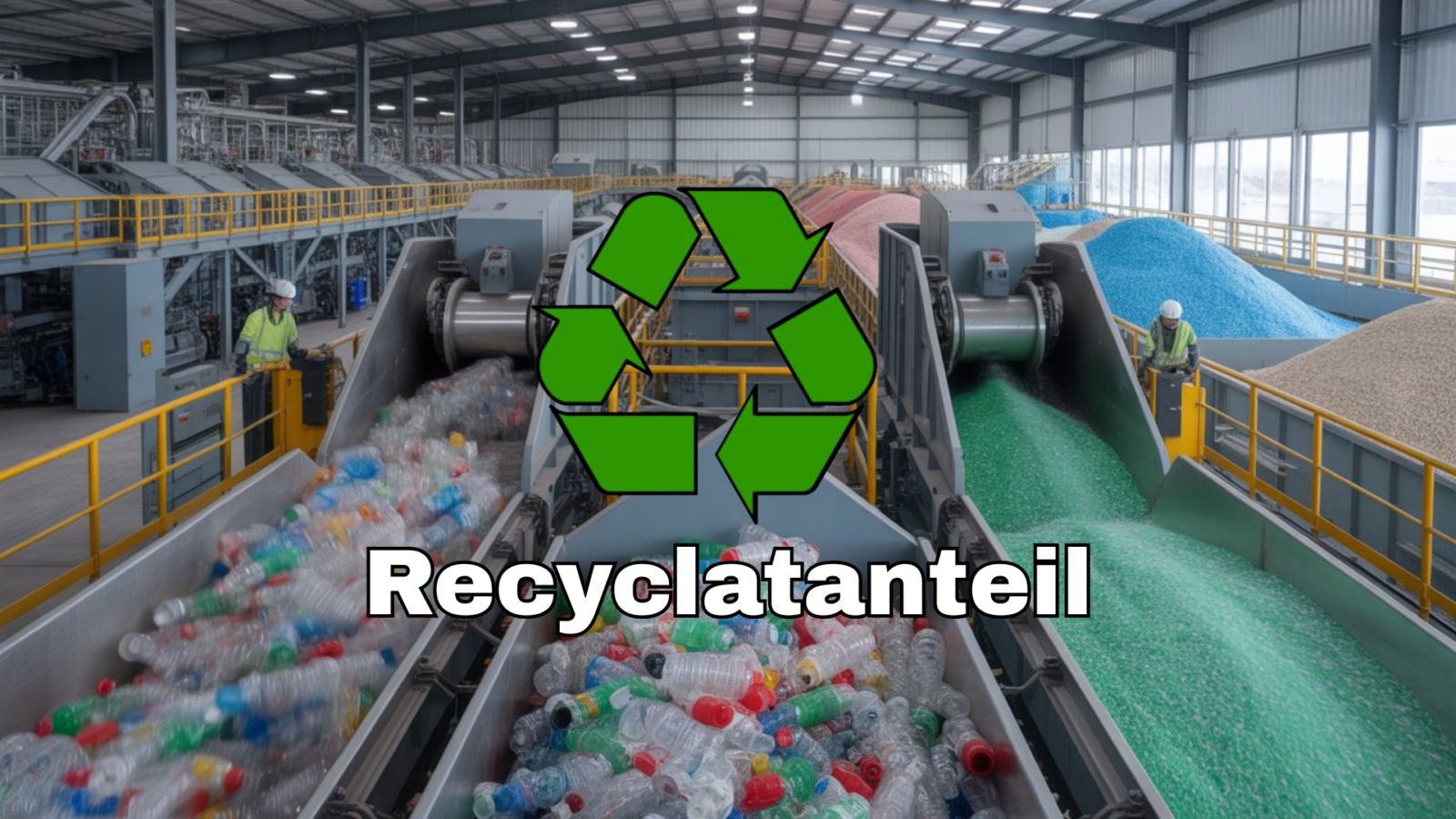

The concept of Recyclatanteil has become one of the most important sustainability topics worldwide, especially in industries like manufacturing, packaging, construction, and environmental policy. As companies move toward greener production methods, understanding how much recycled material is actually used in products matters more than ever.
This article explains Recyclatanteil in simple terms, why it is essential for sustainability, how it differs from recycling rates, and how it supports the future of a circular economy.
What Does Recyclatanteil Mean?
Recyclatanteil refers to the percentage of recycled material contained in a finished product. It shows how much of the total material comes from previously used and recycled sources instead of new, virgin raw materials.
For example:
- A plastic bottle made with 40% recycled plastic has a Recyclatanteil of 40%
- A paper package made with 80% recycled fibers has a Recyclatanteil of 80%
This measurement focuses on material reuse, not just waste collection. It answers the key sustainability question:
Are recycled materials truly being used again in new products?
Recyclatanteil vs Recycling Rate (Key Difference)
Many people believe that high recycling automatically means high sustainability. However, that is not always true.
Recycling Rate
Recycling rate measures:
- How much waste is collected
- How much waste is processed through recycling systems
Recyclatanteil
Recyclatanteil measures:
- How much recycled material actually ends up in new products
A country or company can recycle large amounts of waste but still use mostly virgin materials in production. In such cases:
- Recycling rate may be high
- Recyclatanteil may remain low
That is why Recyclatanteil is considered a more realistic indicator of true circular economy success.
Why Recyclatanteil Is Important for Sustainability
Increasing the recycled content percentage in products offers major environmental benefits:
1. Reduces Virgin Resource Extraction
Higher Recyclatanteil lowers the need for new raw materials like petroleum, metals, and wood.
2. Cuts CO₂ Emissions
Producing recycled materials usually requires less energy, which reduces greenhouse gas emissions.
3. Strengthens Recycling Markets
Demand for recyclates increases when companies use more recycled input materials.
4. Supports the Circular Economy
A high Recyclatanteil helps close the material loop by turning waste into valuable resources again.
Instead of recycling waste once and discarding it, recyclates become part of continuous production cycles.
Recyclatanteil and Circular Economy Goals
Recyclatanteil is one of the most important indicators for measuring progress toward a circular economy, where materials are kept in use as long as possible.
A functioning circular economy depends on:
- Recycling systems
- High-quality recyclate production
- Real demand for recycled content
Without strong Recyclatanteil targets, recycling becomes incomplete because materials are collected but not reused.
Policy and Legal Pressure to Increase Recyclatanteil
Governments worldwide are introducing minimum recycled content requirements, especially in:
- Plastic packaging
- Beverage bottles
- Automotive materials
- Construction products
These regulations aim to ensure that recycling systems lead to real reuse, not just waste processing.
By targeting Recyclatanteil instead of only recycling rates, policymakers encourage:
- Long-term resource efficiency
- Innovation in sustainable manufacturing
- Higher use of post-consumer recyclates
Real Example: 100% Recycled PET Bottles
One of the strongest examples comes from the beverage industry.
Some companies have introduced bottles made entirely from 100% recycled PET, meaning:
- No virgin plastic is used
- Recyclatanteil reaches the maximum possible value
These bottles meet strict safety and quality standards, proving that recycled materials can perform just as well as new materials when processed correctly.
This is an important milestone in sustainable packaging development.
Discover exclusive content from Urbaneditorial
Recyclatanteil in Different Industries
Recyclatanteil varies depending on the industry and material type:
Plastic Packaging
Increasing recycled content is challenging due to:
- Food safety requirements
- Material purity issues
- Limited supply of high-quality recyclates
Still, progress is being made through improved sorting and recycling technologies.
Construction Industry
Construction materials often have higher Recyclatanteil because recycled concrete, steel, and insulation materials are widely used.
Textiles and Fashion
Brands are increasingly using recycled polyester and fibers to reduce environmental impact.
Automotive Sector
Car manufacturers are integrating recycled plastics and metals to meet sustainability goals.
Technical Challenges of High Recyclatanteil
Using recycled materials comes with technical and quality challenges:
- Variations in color and appearance
- Differences in strength and durability
- Contamination risks in recycled plastics
- Processing difficulties in manufacturing
To overcome these issues, companies invest in:
- Advanced sorting systems
- Better cleaning and purification
- Material innovation
- Product redesign for recyclability
Technological improvements play a major role in making higher Recyclatanteil possible.
How Companies Increase Recyclatanteil
Companies that successfully raise recycled content often take strategic steps such as:
- Designing products with fewer material types
- Using certified recycled materials (PCR content)
- Partnering with recycling suppliers
- Investing in recyclate research and development
- Improving transparency and sustainability reporting
Over time, these efforts reduce dependence on virgin resources and can even lower long-term production costs.
Consumer Influence on Recyclatanteil
Consumers play a major role in driving demand for recycled-content products.
People increasingly prefer:
- Sustainable packaging
- Products labeled with recycled content percentage
- Eco-friendly brands supporting circular economy practices
When consumers choose products with higher Recyclatanteil, companies are encouraged to increase their recycled material usage.
Future Outlook for Recyclatanteil
The future of Recyclatanteil is very promising.
Key trends include:
- Stronger recycled content regulations
- Growth in sustainable product standards
- Advanced recycling technologies such as chemical recycling
- Increasing corporate sustainability commitments
As environmental targets become stricter, Recyclatanteil will remain a central KPI for sustainable production worldwide.
Companies that adapt early will be better prepared for future market expectations.
Top SEO Keywords Related to Recyclatanteil
To rank higher on Google, your content can naturally include terms such as:
- Recyclatanteil meaning
- recycled content percentage
- recycled material in packaging
- Recyclatanteil vs recycling rate
- circular economy indicator
- post-consumer recycled content (PCR)
- sustainable manufacturing
- recycled content regulations
- 100% recycled PET bottles
FAQs
What does Recyclatanteil measure?
It measures the percentage of recycled material used in a product’s total composition.
Is Recyclatanteil the same as recycling rate?
No. Recycling rate measures waste collection, while Recyclatanteil measures recycled material use in new products.
Why is Recyclatanteil important?
It shows whether recycling actually replaces virgin materials and supports real sustainability.
Can products have 100% Recyclatanteil?
Yes, depending on material quality and available recycling technology.
Will Recyclatanteil requirements increase in the future?
Yes. Governments and industries are moving toward higher recycled content targets globally.
Conclusion
Recyclatanteil is one of the most important indicators of real sustainability progress. It measures how effectively recycled materials are reintegrated into new products rather than simply collected as waste.
By increasing Recyclatanteil, industries can:
- Reduce raw material extraction
- Lower carbon emissions
- Strengthen recycling markets
- Support a functioning circular economy
As regulations, technology, and consumer awareness evolve, Recyclatanteil will remain at the center of sustainable production strategies worldwide.