
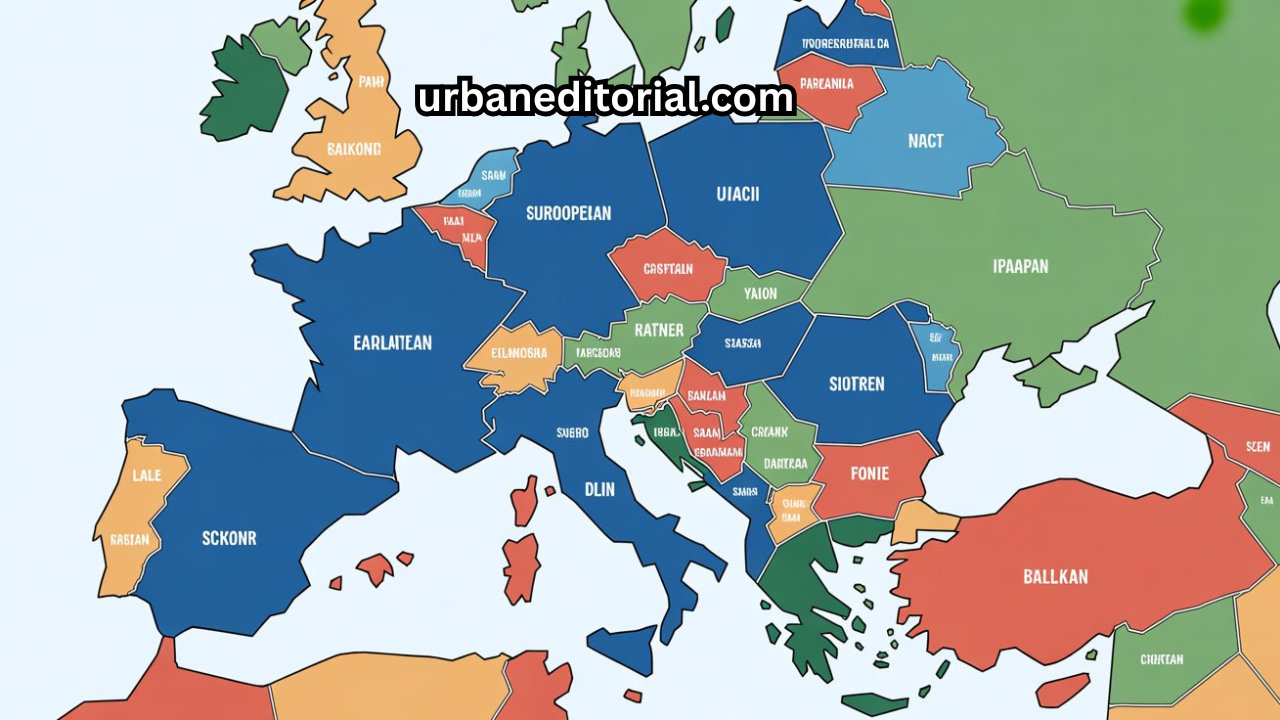

The term EU Balkan describes the evolving political, economic, and strategic partnership between the European Union and the Balkan region, particularly the Western Balkans. This relationship plays a central role in Europe’s long-term stability, expansion policy, and geopolitical strategy. As the European Union continues its enlargement agenda, the EU Balkan framework has become one of the most significant pillars of European foreign and neighborhood policy.
The Balkan region has historically experienced political transitions, ethnic tensions, and institutional rebuilding. Because of this background, the European Union views integration of the region as essential for maintaining continental peace and preventing instability near EU borders. The EU Balkan process is not simply about expanding membership; it is about structured reform, regional cooperation, democratic consolidation, and economic alignment with European standards.
Today, the EU Balkan partnership influences everything from governance systems and trade regulations to border management and digital transformation. Understanding this framework helps explain the future direction of Europe and the strategic importance of Southeast Europe within it.
Understanding the Western Balkans in the EU Balkan Framework
The EU Balkan strategy primarily focuses on six Western Balkan countries:
- Albania
- Bosnia and Herzegovina
- Kosovo
- Montenegro
- North Macedonia
- Serbia
These countries are geographically located in Southeast Europe and are surrounded by European Union member states. Although not yet EU members, they are formally engaged in structured integration pathways created by the European Union.
Under the EU Balkan enlargement mechanism, each country must align its legislation, institutions, and governance practices with EU standards, also known as the acquis communautaire. This alignment includes reforms in judiciary independence, public administration, competition law, environmental protection, and human rights.
The Western Balkans are strategically positioned as a bridge between Central Europe, Eastern Europe, and the Mediterranean region. Stability in this area directly affects European migration flows, trade corridors, energy routes, and regional security dynamics. For this reason, the EU Balkan agenda remains a high strategic priority for Brussels.
Why EU Balkan Relations Matter for Europe
The importance of EU Balkan cooperation extends beyond symbolic political commitments. It directly impacts security, economic growth, and geopolitical balance.
1. Security and Stability
A stable Balkan region minimizes the risk of renewed regional tensions. By integrating Balkan countries into European structures, the EU reduces external influence and strengthens democratic institutions.
2. Economic Integration
Stronger economic ties create cross-border supply chains, investment opportunities, and new consumer markets. Integration reduces economic disparities between EU member states and Balkan economies.
3. Migration and Border Management
The Balkan route has historically played a role in migration flows toward Western Europe. Coordinated policies improve border control, asylum procedures, and humanitarian management.
4. Democratic Governance
Reforms encouraged through the EU Balkan process strengthen rule of law, media freedom, transparency, and anti-corruption frameworks.
These elements collectively reinforce long-term European resilience.
EU Balkan Enlargement Policy and Membership Pathway
Enlargement is the most powerful tool within the EU Balkan framework. However, accession is a merit-based and highly structured process.
Each country must meet strict political and economic criteria known as the Copenhagen Criteria. These include:
- Stable democratic institutions
- Functioning market economy
- Ability to adopt EU laws and obligations
The accession process is divided into negotiation chapters covering areas such as judiciary reform, financial control, competition policy, agriculture, and environmental standards.
Some Western Balkan countries have opened negotiation chapters, while others remain in earlier stages of candidacy. Progress depends on reform implementation rather than political timelines. Although the process can be slow, it remains a transformative mechanism for institutional modernization across the region.
Discover exclusive content from Urbaneditorial
Economic Transformation Under the EU Balkan Agenda
Economic convergence is a core objective of the EU Balkan partnership. The European Union provides financial support through pre-accession funds, infrastructure development programs, and investment guarantees.
Key areas of focus include:
- Transport and regional connectivity
- Digital transformation
- Renewable energy transition
- SME (Small and Medium Enterprise) development
- Green economy reforms
Reducing the economic gap between the Balkans and EU member states is essential for sustainable enlargement. Stronger Balkan economies reduce migration pressures and increase regional stability.
Access to EU markets allows Balkan exporters to expand operations under harmonized standards. In return, EU businesses gain new production hubs and strategic investment locations.
Trade and Investment Dynamics
The European Union is the largest trading partner for Western Balkan countries. A significant share of exports from the region flows directly into EU markets.
Trade liberalization under Stabilisation and Association Agreements allows Balkan businesses to operate with reduced tariffs and improved regulatory alignment. This trade relationship promotes:
- Industrial modernization
- Skills development
- Technology transfer
- Cross-border business cooperation
Foreign direct investment from EU member states plays a major role in sectors such as manufacturing, telecommunications, energy infrastructure, and financial services. These investments accelerate economic restructuring and job creation.
Political Reform and Institutional Alignment
Political reform is at the heart of the EU Balkan integration model. The European Union regularly evaluates governance progress in each country.
Reforms typically focus on:
- Judicial independence
- Anti-corruption enforcement
- Public administration efficiency
- Electoral transparency
- Protection of fundamental rights
Regular EU reports assess progress and recommend further actions. This monitoring system ensures accountability and encourages consistent reform momentum.
Regional cooperation is also promoted through dialogue platforms designed to resolve bilateral disputes and strengthen neighborly relations.
Border Security and Regional Cooperation
Practical cooperation in border management represents one of the most visible achievements of EU-Balkan collaboration.
Joint training programs, technical assistance, and coordinated operations enhance the capacity of Balkan border authorities. These efforts help:
- Combat organized crime
- Address human trafficking
- Manage migration routes
- Improve customs efficiency
Such operational cooperation builds trust and strengthens shared security objectives between the EU and Balkan states.
Social and Cultural Integration
Beyond politics and economics, the EU Balkan relationship promotes social cohesion and youth engagement.
Educational exchange programs, research collaboration, and civil society funding encourage people-to-people connectivity. Young professionals from the Balkans increasingly participate in European academic and professional networks.
Cultural initiatives foster mutual understanding and reduce historical tensions. By promoting inclusion and European identity, the partnership strengthens long-term regional stability.
Challenges Facing the EU Balkan Process
Despite significant progress, challenges remain:
- Slow pace of institutional reforms
- Political polarization in some countries
- Public frustration over delayed membership timelines
- Economic disparities within the region
- Influence of non-EU geopolitical actors
However, these challenges do not undermine the long-term strategic importance of integration. Instead, they highlight the need for sustained political will and consistent reform implementation.
Future Outlook of EU Balkan Integration
The future of EU Balkan cooperation depends on continued reform efforts and credible enlargement commitments from the European Union.
The EU has repeatedly emphasized that the Western Balkans belong to Europe’s future. While full membership may take time, gradual integration already provides tangible benefits in trade, governance modernization, infrastructure development, and regulatory alignment.
Enhanced economic integration before full accession could further accelerate convergence and build public support for reform.
Ultimately, the partnership represents a long-term investment in continental unity, stability, and shared prosperity.
FAQs
What does EU Balkan mean?
It refers to the structured political, economic, and enlargement relationship between the European Union and Western Balkan countries.
Which countries are involved?
Albania, Bosnia and Herzegovina, Kosovo, Montenegro, North Macedonia, and Serbia.
Are they EU members?
No. They are candidate or potential candidate countries undergoing reforms toward membership.
Why is integration important?
It strengthens regional stability, promotes economic growth, and enhances European security.
Will they join the EU?
Membership depends on reform progress and meeting EU criteria, but long-term integration remains supported.
Conclusion
The EU Balkan partnership represents one of the most strategically significant integration processes in contemporary Europe. It combines enlargement policy, economic transformation, governance reform, and regional cooperation under a shared European vision.
Although challenges persist, structured reforms, financial investment, and political dialogue continue to move the region closer to European standards. The future of Southeast Europe and the European Union is deeply interconnected, making this partnership essential for long-term stability, prosperity, and continental unity.