
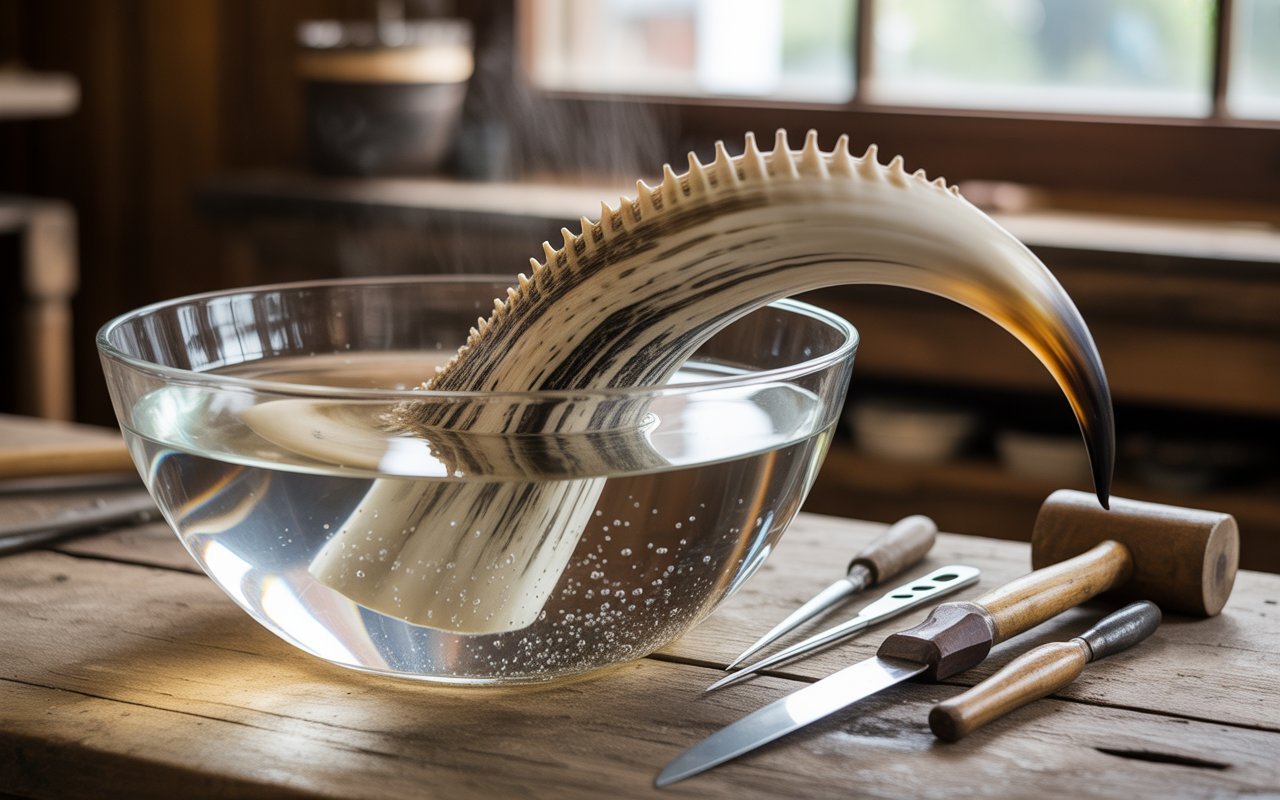

Soaking horn is a traditional technique that remains vital in modern craftsmanship and animal care. From shaping drinking horns to preparing hooves for trimming, understanding how to soak horn safely ensures better results and preserves material integrity.
This guide explains everything you need to know about soaking horn: methods, science, benefits, risks, and practical tips. You’ll also find real examples and common mistakes to avoid, helping both artisans and animal caregivers achieve optimal results.
What Is Soaking Horn?
Soaking horn is the process of immersing an animal horn or hoof in water or a mild solution to soften its keratin structure. Horns are naturally hard, making them difficult to shape or clean without moisture. Soaking introduces flexibility, allowing artisans to mold horn into tools, decorative items, or drinking vessels.
In livestock care, soaking hooves helps remove debris, soften hardened tissue, and prepare for trimming. Both applications rely on the same principle: moisture temporarily increases keratin pliability without compromising its natural strength.
Historical Background of Soaking Horn
Soaking horn has been practiced for centuries. Ancient artisans would soak horns for weeks to separate the inner core from the outer shell, making the material easier to shape. The softened horn was then flattened and molded into sheets for utensils, musical instruments, and even lamp covers.
Before modern plastics or metals, horn sheets were a vital material in daily life. The slow soaking process allowed the horn to retain strength while becoming pliable, demonstrating a delicate balance between tradition and technique.
The Science Behind Soaking Horn
Horn is made of keratin, a protein also found in human nails. Keratin absorbs moisture when exposed to water, increasing flexibility. Warm water accelerates the softening process, but excessive heat can damage the horn.
Factors affecting soaking include:
- Time – Short soaks may be sufficient, but extended soaking softens more deeply.
- Water temperature – Lukewarm water is ideal for both crafts and hooves.
- Additives – Mild solutions such as baking soda or salt help clean and reduce odor.
Proper understanding ensures that soaking achieves flexibility without weakening the horn’s structure.
Soaking Horn for Crafting
Craftsmen use soaking horn to prepare raw material for shaping. The process usually involves:
- Cleaning the horn to remove dirt
- Soaking in lukewarm water until flexible
- Carefully shaping or flattening
- Polishing and finishing once the desired form is achieved
Real-world example: artisans making drinking horns start by soaking the horn to loosen the inner core. After removal, the horn is shaped with heat and finished with polish, creating a smooth, durable vessel.
Soaking Horn in Livestock and Hoof Care
In livestock management, soaking horn or hooves can:
- Loosen dirt and manure from hooves
- Soften hard horn for trimming
- Provide temporary relief for minor hoof conditions
However, excessive soaking may trap moisture, delaying healing and increasing infection risk. Short, controlled soaks followed by proper drying are essential to maintain hoof health.
Discover exclusive content from Urbaneditorial
Practical Steps for Soaking Horn
For Craftsmen
- Clean the horn thoroughly
- Use lukewarm water
- Soak in intervals, checking flexibility
- Shape the horn promptly to avoid cooling
For Animal Care
- Limit soak time to 10–15 minutes
- Dry hooves thoroughly afterward
- Seek professional advice for serious hoof issues
Following these steps ensures effective soaking without compromising material or animal health.
Common Mistakes When Soaking Horn
- Over-soaking, which can weaken or warp horn
- Using excessively hot water, causing deformation
- Assuming soaking replaces professional care in hooves
- Ignoring drying steps, which may encourage fungal growth or cracking
Avoiding these mistakes preserves the integrity of both horn crafts and animal hooves.
Key Benefits of Soaking Horn
- Enhanced flexibility – Easier to shape for crafts
- Improved cleanliness – Removes dirt and debris
- Prepares material for finishing – Polishing or trimming becomes easier
- Supports hoof health – When done properly, softens hooves for safer trimming
Proper soaking provides both aesthetic and functional advantages.
Tools and Supplies Needed for Soaking Horn
Essential items include:
- Buckets or tubs for immersion
- Lukewarm water
- Mild cleaning agents
- Brushes for debris removal
- Hoof soaking bags (for livestock care)
Having the right tools makes the process safer, faster, and more effective.
FAQs
- How does soaking horn help in crafting?
It softens keratin, allowing the horn to be shaped and molded for utensils or drinking horns. - Can soaking hooves harm animals?
Prolonged soaking can trap moisture and delay healing; short, controlled soaks are safer. - How long should horn be soaked?
Soaking can range from a few minutes to several hours depending on size and thickness. - Does soaking remove horn odor?
Yes, soaking in mild solutions can help reduce natural odor from drinking horns. - Is soaking a substitute for professional hoof care?
No. Professional consultation is necessary for serious hoof conditions.
Conclusion
Soaking horn is a versatile technique essential for both craftsmanship and animal care. Properly done, it softens horn for shaping, helps clean and prepare hooves, and preserves material integrity. Understanding factors like soak time, temperature, and drying ensures safe, effective results.
Whether you’re crafting artisan drinking horns or maintaining healthy livestock, mastering the art of soaking horn enhances both function and quality.