
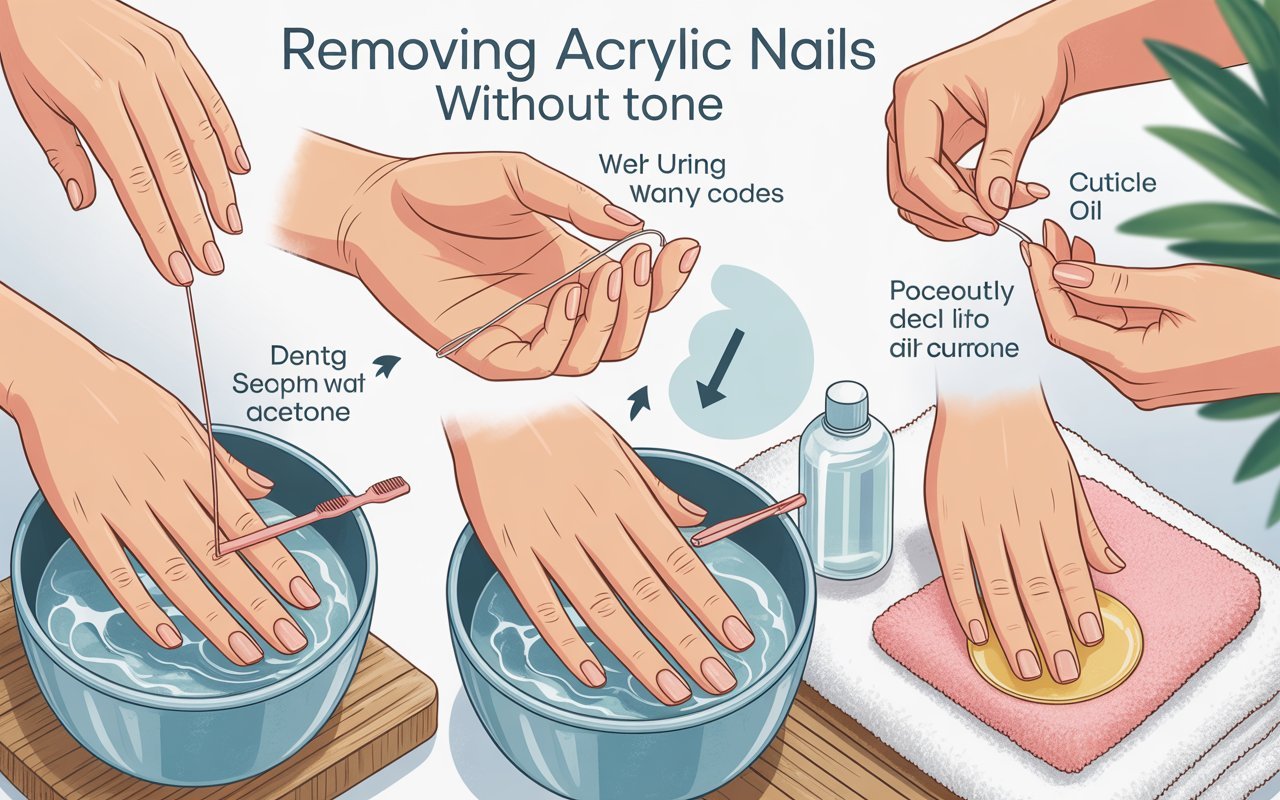

Many people today want to remove acrylic nails without acetone because acetone can be harsh on natural nails and skin. It often causes dryness, peeling, and irritation, especially for people with sensitive hands. The good news is that acrylic nails can be removed safely without using acetone — it just requires patience and the right technique.
In this detailed guide, you will learn practical, gentle, and proven methods to remove acrylic nails at home without damaging your natural nails. These methods focus on safety, nail health, and long-term care.
Why People Prefer to Remove Acrylic Nails Without Acetone
Acetone works fast, but it strips away natural oils from nails and surrounding skin. This can leave nails weak and brittle after removal. Many users report discomfort, burning sensations, and extreme dryness after acetone use.
That is why people choose acetone-free methods. These alternatives are slower, but they are much kinder to nails. They help maintain nail strength and reduce post-removal damage, making them ideal for frequent acrylic nail users.
Warm Soapy Water Method for Acrylic Nail Removal
One of the safest ways to remove acrylic nails without acetone is using warm soapy water. This method relies on heat and moisture to soften the adhesive bond.
Start by filling a bowl with warm water and adding mild soap. Soak your nails for 20 to 30 minutes. The warmth loosens the glue gradually. After soaking, gently test the edges using a wooden cuticle stick. If the nail does not lift easily, soak again.
This method works best for acrylics that are already growing out or slightly loose.
Using Natural Oils to Loosen Acrylic Nails
Natural oils like olive oil, coconut oil, or cuticle oil are excellent for gentle acrylic nail removal. Oils seep under the acrylic and weaken the adhesive while moisturizing the nail bed.
Warm the oil slightly and apply it generously around the nail edges. Place soaked cotton over each nail and leave it on for 10 to 15 minutes. Gently lift the acrylic using a wooden stick.
This method is ideal for dry or damaged nails because it conditions them while removing acrylics.
Acetone-Free Nail Polish Remover Method
Some nail polish removers do not contain acetone and instead use milder solvents. These removers are slower but safer for nails.
Trim acrylic nails as short as possible. Pour the acetone-free remover into a bowl and soak your nails for 30 to 40 minutes. After soaking, gently lift the acrylic using tweezers or a cuticle stick.
This method requires patience but significantly reduces nail dryness.
Dental Floss Technique for Careful Removal
The dental floss method is useful once the acrylic edges are already loose. It should never be used on tightly bonded nails.
Insert a wooden stick gently under the acrylic edge. Slide dental floss underneath and move it slowly from side to side. This technique helps lift the acrylic evenly without pulling.
Always stop if you feel pain or resistance.
Discover exclusive content from Urbaneditorial
Filing Down Acrylics Before Removal
Sometimes acrylic nails are too thick for soaking methods alone. Filing reduces bulk and allows moisture to penetrate better.
Trim the nail length and lightly file the top surface to remove the shiny seal. Avoid filing the natural nail. Once thinned, use warm water or oil methods for easier removal.
This combination method improves results and reduces removal time.
Common Mistakes to Avoid During Removal
Many people damage their nails by forcing acrylics off too quickly. Peeling or ripping acrylic nails can remove layers of the natural nail.
Avoid metal tools, aggressive prying, and rushing the process. Slow removal protects nail health and prevents long-term weakness.
Real Home Example
A user with sensitive skin avoided acetone due to irritation. She trimmed her acrylics, soaked them in warm soapy water, then used olive oil wraps. After 45 minutes, the acrylics lifted easily without pain. Her natural nails remained smooth and undamaged, proving that gentle methods work when done correctly.
Post-Removal Nail Care Is Essential
After you remove acrylic nails without acetone, nails may feel soft or thin. Proper aftercare helps restore strength.
Apply cuticle oil twice daily, use hand cream regularly, and avoid polish for a few days. Nail strengtheners can also help rebuild natural nail layers.
Good aftercare prevents peeling and prepares nails for future manicures.
When Not to Remove Acrylics at Home
If acrylic nails are extremely tight, painful, or infected, home removal is not recommended. In such cases, professional removal is safer.
Listening to your nails is important. Pain is a warning sign.
FAQs
- Can acrylic nails really be removed without acetone?
Yes, warm water, oils, and acetone-free removers can safely remove acrylic nails with patience. - How long does acetone-free removal take?
It usually takes 30 to 60 minutes, depending on nail thickness and method used. - Is removing acrylic nails without acetone safer?
Yes, it is gentler and helps prevent dryness and nail damage. - Will warm water alone remove acrylic nails?
It softens the adhesive, but results improve when combined with oil or gentle tools. - What should I do after acrylic nail removal?
Moisturize, apply cuticle oil, and allow nails to rest for a few days.
Conclusion
Learning how to remove acrylic nails without acetone gives you a safer and healthier option for nail care. While these methods take more time, they protect your natural nails from damage and dryness. Warm water, natural oils, acetone-free removers, and patience are the keys to success.
With proper technique and aftercare, you can safely enjoy acrylic nails without sacrificing nail health.