
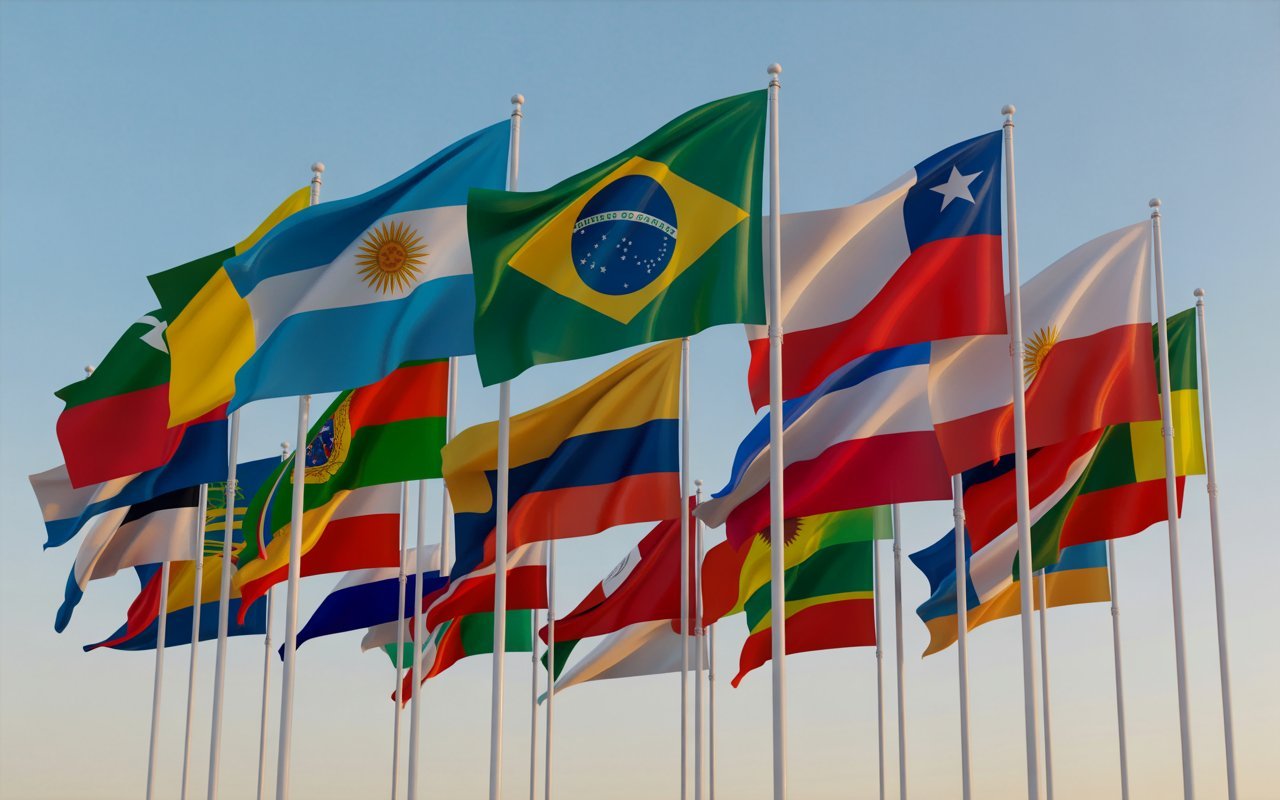

South American flags are more than just pieces of fabric—they are living symbols of national pride, history, and culture. Each South American flag reflects a country’s journey toward independence, its natural landscape, and its cultural values. Across the continent, these flags unify millions while celebrating unique national identities. In this article, we explore the history, symbolism, and significance of these flags, as well as how they continue to shape national identity today.
What Are South American Flags?
South American flags are official emblems representing the sovereign nations of the continent. South America consists of 12 recognized countries—Argentina, Bolivia, Brazil, Chile, Colombia, Ecuador, Guyana, Paraguay, Peru, Suriname, Uruguay, and Venezuela—alongside territories such as French Guiana and the Falkland Islands.
These flags are displayed on national holidays, international events, and public buildings. While some countries share similar colors or patterns due to historical connections, each flag has its own distinct story, reflecting local culture, geography, and the struggle for independence.
Common Colors & Their Meaning
Many South American flags use recurring colors, each carrying symbolic meaning:
- Yellow: Represents natural wealth, gold, and the sun.
- Blue: Symbolizes loyalty, the sky, and bodies of water.
- Red: Stands for courage, bravery, and blood shed for independence.
- Green: Signifies fertility, hope, and the richness of forests.
- White: Reflects peace, unity, and purity.
These colors not only convey historical and cultural values but also unify the continent through shared symbolism.
Argentina’s Flag: Sun of May & Liberty
Argentina’s flag features three horizontal stripes—two light blue and one white—with a radiant Sun of May at its center. The sun represents freedom and the spirit of independence that arose from the May Revolution of 1810.
The blue signifies the sky over Argentina, while white represents peace and honesty. The Sun of May is unique among South American flags, linking the nation to its historical struggle against colonial rule and serving as a symbol of hope for its citizens.
Brazil’s Flag: Unity Through Stars
Brazil’s green flag features a yellow rhombus and a blue globe with 27 stars, each representing a state or federal district. The stars are arranged to match the constellations over Rio de Janeiro on November 15, 1889, the day Brazil became a republic.
The green symbolizes the Amazon rainforest, yellow represents natural wealth, and the phrase “Order and Progress” on the banner conveys the nation’s aspirations for growth and unity. Brazil’s flag is celebrated for its complex design and deep symbolism.
Shared Origins: The Miranda Tricolor
The yellow-blue-red tricolor introduced by revolutionary leader Francisco de Miranda influenced the flags of Venezuela, Ecuador, and Colombia. These countries were once part of Gran Colombia, a union in the early 19th century.
This shared tricolor serves as a reminder of historical unity, regional struggle against colonial powers, and the continuing connection among these nations. Even today, the similarities among these flags reflect their shared roots while allowing each country to maintain a unique identity.
Discover exclusive content from Urbaneditorial
Unique Flags with Special Symbols
Some South American flags are distinguished by special emblems:
- Suriname: Features a yellow star representing unity among its diverse ethnic groups.
- Uruguay: Includes the Sun of May, echoing Argentina’s historic symbolism.
- Guyana: Known as the “Golden Arrowhead,” the flag symbolizes forward movement and national progress.
These elements make the flags more than mere decorations—they serve as cultural narratives, reminding citizens of their history, values, and aspirations.
International & Regional Flags
Beyond national flags, South America also uses banners to represent regional unity:
- Mercosur: The Southern Common Market flag symbolizes cooperation among member states.
- Union of South American Nations (Unasur): The flag represents continental collaboration and shared development goals.
These South American flags demonstrate that while nations maintain individuality, they also recognize the value of regional identity and collaboration.
Indigenous & Cultural Flags
South America also has cultural flags like the Wiphala, a multicolored square flag representing indigenous Andean communities in Bolivia, Peru, and neighboring countries.
The Wiphala symbolizes heritage, harmony with nature, and ancestral traditions. Many governments display it alongside national flags to acknowledge indigenous populations and their important role in shaping cultural identity.
Case Study: Flags & National Identity
In a survey of South American citizens and flag enthusiasts, preferences often aligned with both design and symbolism. Brazil’s flag was celebrated for its detailed star arrangement and meaningful motto, while Argentina’s flag was admired for the Sun of May.
Other participants highlighted Paraguay’s unique triple-sided design and Guyana’s forward-pointing arrow as examples of innovation in flag design. This case study shows that flags are more than symbols—they are powerful tools for national pride and identity.
How Flags Reflect South American Values
South American flags capture core values such as independence, courage, unity, and hope. The sun, stars, and bold color blocks symbolize historical struggles, cultural pride, and national aspirations.
Flags also serve as a reminder of ancient civilizations, colonial histories, and modern achievements. They are visual storytelling tools that connect citizens to their past while inspiring progress for the future.
FAQs
- How many South American flags exist?
There are 12 national flags for sovereign countries, plus additional flags for territories and regional organizations. - What do common colors in these flags represent?
Yellow for wealth, blue for loyalty or water, red for courage, green for hope, and white for peace. - Do all flags include unique symbols?
Yes, most feature suns, stars, or arrows that reflect history, culture, and independence. - What is the Wiphala flag?
A multicolored flag representing Andean indigenous communities and cultural heritage. - Are there flags representing South America as a whole?
Yes, flags like Mercosur and Unasur represent regional cooperation and unity.
Conclusion
South American flags are living emblems of national character and shared heritage. Each flag tells a story—whether through stars, suns, or unique emblems—and together, they reflect the diversity and unity of the continent.
From Argentina’s Sun of May to Brazil’s detailed starry globe, these South American flags are far more than decorative cloth—they are symbols of resilience, culture, and pride that continue to unite nations across the continent.