
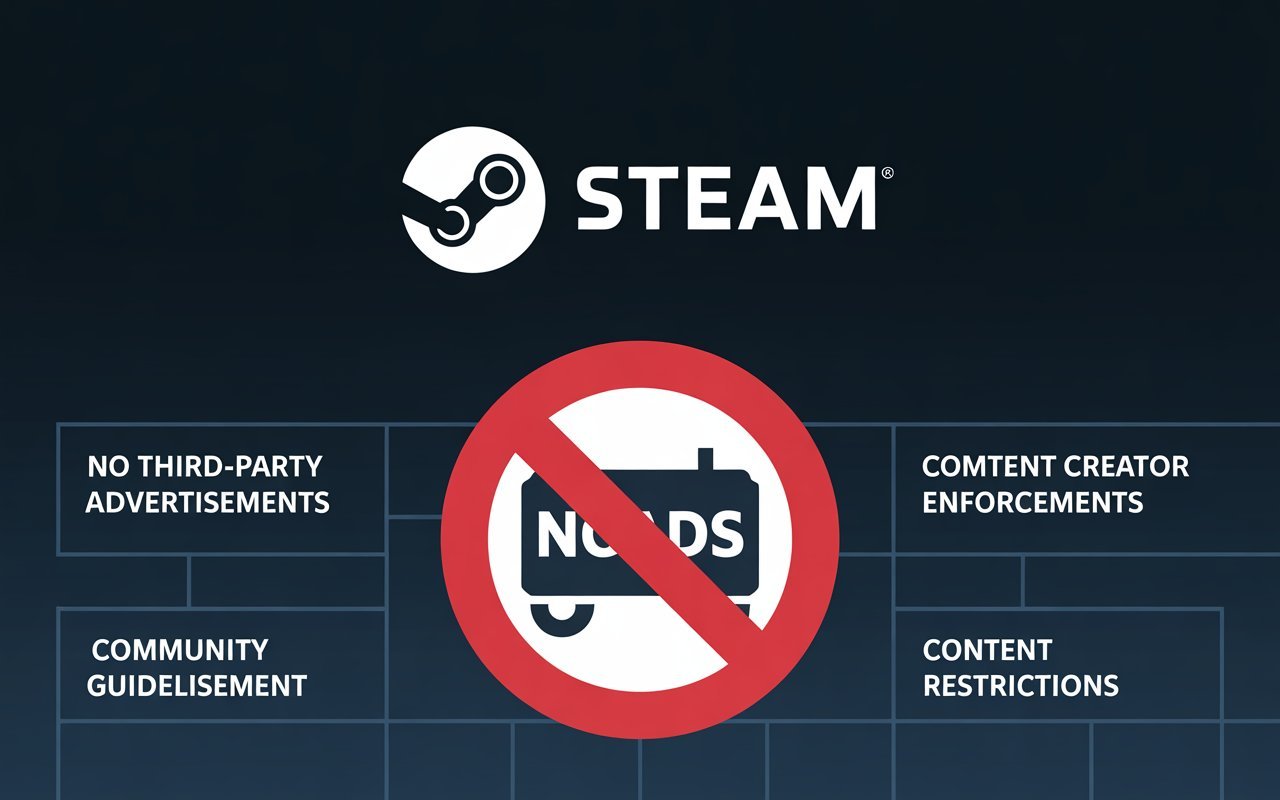

The steam advertising ban refers to Valve’s updated policy that prohibits certain types of paid in‑game advertising on the Steam platform. Specifically, Steam does not allow games that force players to watch or interact with ads as part of gameplay. This change reflects Valve’s effort to protect player experience and keep the PC platform free from intrusive, mobile‑style ad mechanics that disrupt gameplay.
What Is the Steam Advertising Ban?
The steam advertising ban is a section of Steam’s developer guidelines stating that games on the platform cannot rely on advertising as a core business model. This means developers cannot make players watch ads or engage with them to unlock features or access gameplay. In this update, Valve clarified that in‑game ad revenue models like rewarded ads or forced promotional videos are not permitted.
Why Steam Banned Certain In‑Game Ads
Valve’s goal with the steam advertising ban is to avoid the intrusive, repetitive ads common in free mobile games — like forced videos between levels or ads that block gameplay. These practices are often unpopular with players and can harm the overall gaming experience. Steam wants to keep its platform focused on quality gameplay and uninterrupted play, not monetization through ads.
Key Rules of the Steam Advertising Ban
Under the updated policy, the following are not allowed on Steam:
- Games that require players to watch or interact with ads to access gameplay.
- Rewarded ads that give in‑game bonuses for viewing commercials.
- Ad‑based business models where ads are central to a game’s revenue strategy.
Developers relying on these ad systems must change their monetization methods before their game can be released or remain on Steam.
Allowed Advertising Practices on Steam
While the steam advertising ban removes certain ad models, some forms of advertising are still permitted:
H2 – What Steam Still Allows (Bullet Points)
- Product placement: Games can include real‑world brands or sponsorships embedded naturally in the game world.
- Cross‑promotions: Developers can run promotions, bundles, or sale events involving other titles or brands.
- Paid marketing outside Steam: Developers can advertise outside Steam to drive players to their Steam store page.
These allowed forms support visibility and promotion without interrupting players or forcing ad viewing.
Discover exclusive content from Urbaneditorial
Steam Advertising Ban and Mobile Game Ports
Many mobile games depend heavily on ads for revenue. Under the steam advertising ban, titles that rely on such ads must remove or restructure their monetization methods before being listed on Steam. This often means turning the game into a paid purchase, offering optional in‑game purchases, or using DLC and microtransactions instead of ads.
Real Case Example: Mobile Game Port Changes
Consider a popular mobile puzzle game that shows ads after every level and rewards players with in‑game currency for watching commercials. To bring this game to Steam under the new policy, the developer might:
- Sell the game as a paid title for PC players.
- Replace ads with optional cosmetic purchases.
- Offer expansion DLC instead of ad rewards.
This shows how the steam advertising ban shapes monetization strategy during development and porting.
Impact on Developers and Players
For developers, this ban means rethinking how to make revenue without relying on ads. It encourages using models like upfront payment, DLC, microtransactions, or optional in‑game purchases that don’t interrupt gameplay.
Players benefit by enjoying uninterrupted experiences and fewer frustrating ad breaks, leading to better engagement and satisfaction. The policy supports Steam’s reputation as a platform prioritizing quality and player‑friendly content.
Community Reaction & Industry Opinion
The steam advertising ban has generated mixed reactions online. Some players and developers praised the move, saying it prevents PC games from becoming like ad‑heavy mobile titles. Communities noted that while Steam had some ad rules for years, the new documentation makes them clearer and easier for developers to follow.
What Happens If a Game Violates This Policy?
If a game listed on Steam violates the advertising rules — for example, forcing ads to access levels or earning rewards through ad interaction — Valve may require those features to be removed. Failure to comply can result in the game being delisted or not approved for release until changes are made. This enforcement keeps the platform consistent with the updated guidelines.
FAQs
- What exactly is the steam advertising ban?
It’s a policy that stops developers from using ads as a core part of their revenue model on Steam. - Are all types of ads banned on Steam?
No — only intrusive, forced ads that interrupt gameplay; product placement and external ads are allowed. - Does the ban affect mobile games on Steam?
Yes. Games that rely on mobile‑style ads must remove those ads before release on Steam. - Why did Valve enforce this policy?
To prevent intrusive ad models and preserve gameplay quality for users. - Can developers still promote their games on other platforms?
Yes. Developers can run paid ads outside Steam to attract players to their Steam store pages.
Conclusion
The steam advertising ban represents Valve’s clear stance against intrusive paid ads in Steam games. While not all advertising is banned, the policy ensures forced ads and ad‑based revenue models that disrupt gameplay are no longer allowed. This protects player experience, maintains Steam’s quality standards, and pushes developers toward more player‑friendly monetization strategies.