
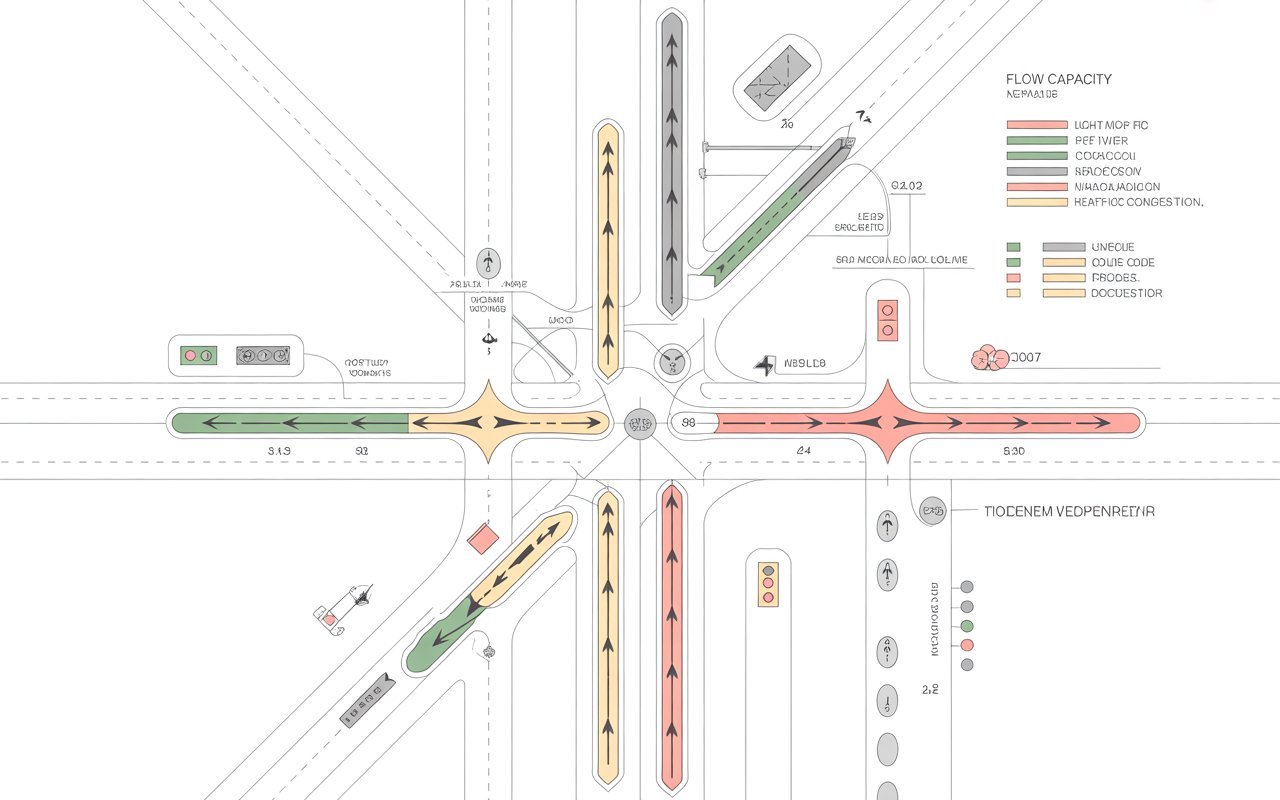

A traffic flow template is a structured framework used to visualize, analyze, and manage the movement of vehicles, pedestrians, or data within a system. It helps planners and engineers understand how traffic behaves and how to improve efficiency.
Cities today face growing congestion. With more vehicles on the road and complex road networks, managing traffic is harder than ever. This is where a traffic flow template becomes useful. It provides a clear visual or data-based layout to analyze traffic patterns, identify bottlenecks, and implement solutions.
Transportation engineers, event planners, construction managers, and city authorities rely on such templates to create safe and efficient traffic systems. These templates allow professionals to analyze patterns, optimize signals, and coordinate traffic strategies effectively.
In this guide, you’ll learn what a traffic flow template is, how it works, its benefits, real-world examples, and how to create one effectively.
What Is a Traffic Flow Template?
A traffic flow template is a pre-designed format used to map and analyze the movement of traffic in a particular environment. It can appear as a diagram, workflow, spreadsheet, or dashboard depending on the project.
These templates help professionals organize information about road usage, signal timing, pedestrian movement, and traffic density. By presenting the information in a structured format, teams can better understand traffic patterns and develop solutions.
For example, many traffic flow templates include sections for traffic data collection, route planning, signal optimization, and performance monitoring. This structured approach allows engineers and planners to manage complex transportation systems more efficiently.
A typical template might include:
- Road network diagrams
- Traffic signal timing plans
- Vehicle counts and flow rates
- Pedestrian crossing information
- Congestion hotspots
With this data, planners can create smarter traffic management strategies that improve safety and reduce delays.
Why Traffic Flow Templates Matter in Modern Cities
Modern cities are growing rapidly, and traffic management has become a major challenge. Without proper planning tools, congestion can increase travel time, fuel consumption, and pollution.
A traffic flow template helps address these problems by offering a systematic way to analyze traffic patterns. It allows planners to visualize traffic movement and identify where problems occur.
For example, if a particular intersection consistently experiences congestion during peak hours, a template can highlight the issue. Engineers can then adjust signal timing or redesign the road layout.
Traffic templates also support better communication among stakeholders. City planners, engineers, construction teams, and law enforcement can collaborate using the same structured data.
This organized approach improves decision-making and helps cities respond faster to traffic challenges.
Discover exclusive content from Urbaneditorial
Key Components of a Traffic Flow Template
A good traffic flow template includes several important components. Each element provides insights into how traffic moves through a system.
Some of the most common components include:
- Traffic volume data – counts of vehicles entering and leaving specific areas
- Road layout diagrams – visual representation of intersections and lanes
- Signal timing schedules – timing for traffic lights and pedestrian signals
- Entry and exit points – routes vehicles use to access or leave an area
- Congestion indicators – areas where traffic slows down frequently
- Safety markers – pedestrian crossings, bike lanes, and hazard zones
These components help planners understand how traffic behaves and where improvements are needed.
By combining data analysis with visual diagrams, the template becomes a powerful planning tool.
Types of Traffic Flow Templates
Different industries use different types of traffic flow templates depending on their goals. Some templates focus on road traffic, while others analyze digital or network traffic.
Common types include:
- Urban traffic management templates – used by city planners to manage road congestion
- Construction traffic control templates – guide vehicle movement around work zones
- Event traffic planning templates – used for concerts, sports events, and festivals
- Traffic signal optimization templates – designed to improve intersection efficiency
- Data traffic flow templates – used in networking to manage digital data streams
For example, construction sites often use traffic control plan templates to define work zones, signage placement, and safety measures around road projects.
Choosing the right type of template depends on the specific traffic problem being solved.
Benefits of Using a Traffic Flow Template
Using a traffic flow template offers many advantages for planners and organizations. It simplifies complex traffic systems and improves planning accuracy.
Some key benefits include:
- Better visualization – traffic patterns become easier to understand
- Improved decision-making – planners can identify problems quickly
- Enhanced safety – helps reduce accidents in high‑risk areas
- Time savings – standardized templates speed up analysis
- Improved collaboration – teams can work with the same structured data
Templates also help organizations maintain consistency across projects. Instead of starting from scratch each time, teams can reuse a proven framework.
This makes traffic planning more efficient and reliable.
How to Create a Traffic Flow Template
Creating a traffic flow template is not difficult, but it requires a clear understanding of the traffic environment.
Here are the basic steps:
- Define the objective – determine whether the template is for city planning, events, or construction
- Collect traffic data – gather vehicle counts, speeds, and travel patterns
- Map the road network – include intersections, lanes, and pedestrian paths
- Identify congestion points – highlight areas where traffic slows down
- Add control measures – include signals, signage, and safety barriers
- Analyze and refine – test the template and adjust based on results
Many professionals use software tools like diagram editors or traffic simulation programs to create templates quickly.
The goal is to design a template that clearly communicates traffic movement and supports better planning decisions.
Real Case Study: Event Traffic Planning
A large sports stadium in a major city faced serious traffic congestion during game days. Thousands of cars arrived within a short time, causing long delays.
City planners used a traffic flow template to analyze the situation.
First, they mapped all entry and exit points around the stadium. Next, they recorded vehicle arrival patterns before and after games. The template showed that most vehicles used the same two entrances, creating bottlenecks.
Using the insights from the template, planners made several changes:
- Added temporary one‑way roads
- Adjusted traffic signal timing
- Directed vehicles to alternative parking areas
The result was a significant reduction in congestion during events. Travel time around the stadium dropped by nearly 30 percent.
This case shows how a well-designed template can transform traffic management.
Best Tools for Building Traffic Flow Templates
Several digital tools help professionals design and manage traffic flow templates.
Some popular options include diagram software, traffic simulation programs, and data visualization dashboards. These tools allow planners to create detailed road maps, analyze traffic patterns, and generate reports.
Many platforms also support collaboration, allowing teams to work together on traffic analysis in real time.
Choosing the right tool depends on the complexity of the project and the level of analysis required.
Common Mistakes to Avoid When Designing Templates
While traffic flow templates are powerful tools, they must be designed carefully. Poorly structured templates can lead to inaccurate analysis.
Some common mistakes include ignoring real-time traffic data, oversimplifying road networks, and failing to consider pedestrian movement.
Another mistake is designing templates without stakeholder input. Traffic systems involve many participants including city planners, engineers, law enforcement, and local communities.
If these stakeholders are not involved, the template may not address real-world challenges.
Testing and updating templates regularly helps ensure accuracy and reliability.
Future Trends in Traffic Flow Planning
Traffic planning is evolving rapidly with the rise of smart cities and artificial intelligence.
Modern traffic systems now use sensors, GPS data, and machine learning to predict traffic patterns. These technologies generate large datasets that can be analyzed using advanced traffic flow templates.
Researchers are also developing AI models that learn traffic patterns directly from real-world data, improving traffic prediction accuracy.
In the future, traffic flow templates may integrate real-time data streams, enabling cities to adjust traffic signals and routes automatically.
This shift toward intelligent traffic systems will make transportation networks more efficient and sustainable.
FAQs
What is a traffic flow template used for?
A traffic flow template helps planners visualize and analyze vehicle movement. It is used to improve traffic management and reduce congestion.
Who uses traffic flow templates?
Urban planners, traffic engineers, event organizers, and construction managers commonly use these templates for planning and analysis.
Can a traffic flow template reduce congestion?
Yes. By identifying bottlenecks and improving traffic signal timing, templates help optimize traffic movement.
Are traffic flow templates used in smart cities?
Yes. Smart cities use advanced templates combined with sensors and real-time data to manage traffic more efficiently.
What tools can create traffic flow templates?
Diagram software, traffic simulation tools, and data visualization platforms are commonly used to build these templates.
sustainable.
Conclusion
A traffic flow template is an essential tool for understanding and managing traffic systems. It helps planners visualize traffic movement, identify congestion points, and develop effective solutions.
From city planning to event management and construction projects, these templates simplify complex traffic analysis. They provide structured data that improves decision‑making and enhances road safety.
As transportation networks continue to grow, the importance of using a well‑designed traffic flow template will only increase. With the help of modern tools and data-driven insights, organizations can create smarter traffic systems that reduce congestion and improve mobility for everyone.